Ever wondered what it truly takes to be the calm, collected individual orchestrating the excitement at a bustling casino table? It’s far more than just adeptly shuffling cards or skillfully spinning a roulette wheel, although those foundational mechanics are absolutely non-negotiable.
From my own experiences, spending countless hours observing tables across different continents, from the vibrant energy of Las Vegas to the meticulous operations in European casinos, I’ve seen firsthand that the true prowess of a top-tier dealer extends way beyond mere technical ability.
With the rapid evolution of technology, including advanced AI in gaming and the increasing shift towards highly personalized guest experiences, the role demands incredible emotional intelligence, sharp observational skills, and an almost intuitive ability to manage both the game’s flow and the diverse personalities of players at the table.
The future of gaming isn’t just about more automation; it’s about a greater demand for dealers who are genuine entertainers, problem-solvers, and human connectors, making those soft skills more critical than ever.
Let’s find out exactly what sets the best apart.
Mastering the Unseen Game: Emotional Intelligence at the Table
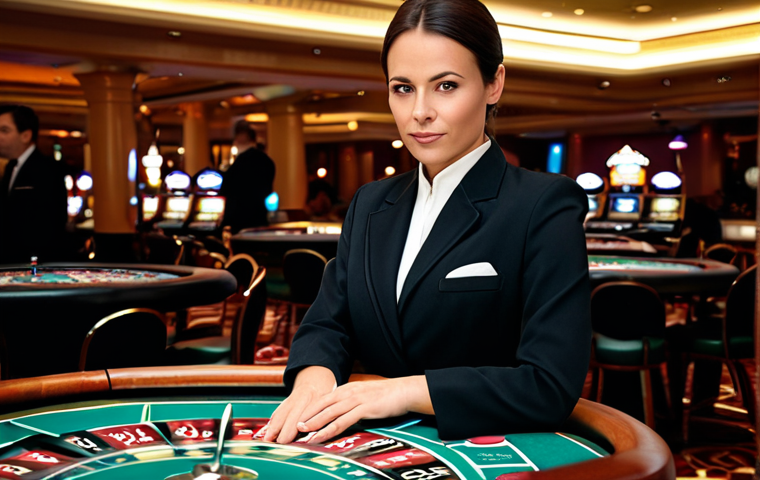
When I first started truly observing the dynamics at a casino table, I was, like many, fixated on the dealers’ hands – how effortlessly they shuffled, the almost hypnotic rhythm of the cards being dealt, the sheer precision of the chip handling.
Yet, what consistently sets the truly exceptional dealers apart, what elevates them from mere mechanical participants to genuine architects of a compelling gaming experience, isn’t solely their technical prowess.
It’s their profound emotional intelligence, an almost uncanny ability to read the room, and not just the changing odds. I’ve personally witnessed seasoned dealers masterfully defuse simmering tensions with a perfectly timed, light-hearted quip, or subtly encourage a timid newcomer with just the right words and a reassuring smile.
This isn’t some textbook skill you pick up overnight; it’s an empathetic connection, honed through countless hours of interaction, of genuinely investing in the atmosphere you’re cultivating.
It’s about being deeply present, understanding that every player arrives with their own unique story, their own hopes, and sometimes their own anxieties for the evening.
The finest dealers intuitively tap into that human element, making each guest feel genuinely seen and valued, thus transforming what could be a simple game into a truly memorable human interaction.
They aren’t just facilitating a game; they are, in essence, the unofficial therapists, the part-time cheerleaders, and the steadfast anchors in a storm of high stakes and raw emotion.
Reading the Room and Responding to Energy
The ability to quickly and accurately assess the emotional landscape of a table is paramount. I’ve seen tables swing from jubilant highs to despairing lows within minutes, and a dealer’s role in managing that flow is often underestimated.
It’s about recognizing the subtle cues: a player’s slumped shoulders, a forced smile, the rising tone in someone’s voice. A great dealer knows when to inject a bit of humor to lighten the mood, when to offer a quiet word of encouragement, or even when to maintain a respectful silence.
This proactive emotional management ensures the game remains enjoyable and fair for everyone involved, reducing the likelihood of disputes or negative interactions.
It’s a nuanced dance, balancing professionalism with genuine human connection, making players feel comfortable and engaged, regardless of whether they’re winning or losing.
Cultivating Authentic Rapport and Trust
Building genuine rapport isn’t about being overly chatty or superficial; it’s about establishing a foundation of trust and respect. I’ve watched dealers remember a player’s favorite drink, their lucky numbers, or even inquire about their day, creating a sense of personalized attention that feels authentic, not forced.
This isn’t just good customer service; it’s a strategic element of their job. When players trust their dealer, they’re more likely to have a positive experience, even if the cards aren’t falling their way.
This trust also extends to the integrity of the game itself. A dealer who can genuinely connect with players, show empathy, and maintain a consistent, fair demeanor instills confidence in the process, making the entire casino experience more enjoyable and enduring for the guest.
The Art of Observational Acuity: Beyond the Obvious
While the fast-paced environment of a casino table might seem to demand quick, almost instinctive reactions, the truly masterful dealers are also incredibly astute observers.
Their eyes, though seemingly focused on the game’s mechanics, are constantly scanning, processing a multitude of non-verbal cues and subtle shifts in behavior that most patrons would never even notice.
I’ve spent countless hours trying to emulate this level of observation, and it’s humbling to realize just how much information a top dealer absorbs. They aren’t just watching for tells in poker; they’re noticing everything from a player’s increasing frustration, the subtle signs of someone struggling with responsible play, to even potential security concerns.
This isn’t about being intrusive; it’s about maintaining control, ensuring the integrity of the game, and most importantly, looking out for the well-being of their guests.
They’re like human sensors, processing an immense amount of data in real-time, often anticipating issues before they even fully manifest.
Spotting Patterns and Player Tendencies
This level of observation isn’t just about reading emotions; it’s about recognizing patterns. I’ve seen dealers subtly adjust their patter or pacing based on a player’s general demeanor or their betting patterns, almost instinctively knowing when a player might be feeling lucky, or conversely, when they’re pushing their limits.
They learn the rhythm of each individual player at their table, understanding when to offer a lighthearted distraction, when to focus purely on the game, or when to politely suggest a break.
This nuanced understanding of player tendencies, developed through sheer volume of experience, allows them to tailor their interactions, ensuring that each person feels understood and respected within the flow of the game.
Maintaining Game Integrity and Security Awareness
Beyond managing the emotional atmosphere, a dealer’s observational skills are critical for maintaining the absolute integrity of the game and the security of the table.
Their trained eyes are constantly on the lookout for anything out of the ordinary: unusual betting patterns, suspicious behavior, or even minor procedural errors that could compromise the fairness of the game.
From my perspective, this is where the “authority” part of EEAT truly shines. They are the first line of defense, often spotting subtle attempts at cheating or collusion that surveillance cameras might miss.
This constant vigilance, performed with an outwardly calm and pleasant demeanor, is a testament to their professionalism and dedication to upholding the rules of the house.
Navigating the Emotional Rollercoaster: Composure Under Pressure
Imagine being in a high-stakes environment where tens, even hundreds of thousands of dollars, can change hands in a matter of seconds, all while maintaining a calm, approachable facade.
That, my friends, is the daily reality for a casino dealer. The ability to remain composed, even when a furious player is questioning a decision, or when the pressure of a particularly large pot is palpable, is nothing short of extraordinary.
I’ve seen dealers handle situations that would send most people into a panic – everything from a significant payout error (immediately rectified, of course) to a player’s dramatic outburst.
Their unwavering professionalism in these moments is not just impressive; it’s absolutely crucial for the smooth operation of the casino and for maintaining an atmosphere of calm and control.
Handling Conflict and Difficult Personalities with Grace
One of the toughest aspects of being a dealer, which I’ve observed countless times, is the art of de-escalation. When emotions run high, as they often do in a gambling environment, dealers are frequently the first point of contact for frustrated or angry players.
The best ones don’t react defensively; instead, they listen patiently, acknowledge the player’s feelings without necessarily agreeing, and then calmly refer to the rules or call for pit boss intervention when necessary.
It’s a delicate balance of empathy and unwavering adherence to protocol. This unflappable ability to remain polite and professional, even when faced with aggressive behavior, is a hallmark of true expertise and contributes significantly to the overall trust players place in the establishment.
Maintaining Focus Amidst Distractions and High Stakes
The sheer volume of sensory input at a casino table – the noise, the lights, multiple conversations, the rapid-fire decisions – is immense. Yet, dealers must maintain razor-sharp focus on the game, the payouts, and the complex rules.
I’ve tried to replicate that level of concentration in quieter settings, and it’s incredibly draining. The ability to filter out distractions, process multiple data streams (cards, chips, player actions, internal thoughts) simultaneously, and execute flawlessly under the constant pressure of large sums of money is a testament to their mental fortitude.
It’s an endurance test for their attention span, proving that their composure isn’t just an act, but a deeply ingrained professional discipline.
The Silent Language of the Table: Non-Verbal Communication Mastery
It’s not just about what a dealer says, but how they say it, and what their body language communicates. I’ve observed that the most effective dealers possess an almost innate understanding of non-verbal communication, both in sending clear, reassuring signals and in accurately interpreting those from players.
From the subtle nod that acknowledges a player’s decision to the open-palmed gesture that invites further bets, every movement is deliberate and designed to foster clarity and trust.
This silent dialogue is particularly crucial in a multicultural environment where language barriers might exist, allowing for a universal understanding of the game’s flow and rules.
Conveying Confidence and Authority Through Poise
A dealer’s posture, hand movements, and even their eye contact speak volumes. A confident, open posture projects trustworthiness and control, reassuring players that the game is being handled professionally and fairly.
Conversely, any hint of nervousness or hesitation can subtly undermine a player’s confidence. I’ve noticed how the best dealers use their hands not just to manipulate cards and chips, but to guide the game’s rhythm, to indicate betting opportunities, and to signify completion of a round with an almost artistic grace.
This silent authority helps maintain order and efficiency, ensuring that the game progresses smoothly and without confusion, which is vital for high-volume tables.
The Subtle Art of De-escalation Through Body Language
Beyond simply conveying information, non-verbal communication is a powerful tool for de-escalation. A calm, open stance, rather than a confrontational one, can immediately lower the emotional temperature of a heated situation.
Dealers often use gestures to invite clarity, to show they are listening, or to indicate a call for supervision without ever raising their voice or showing overt frustration.
I recall an instance where a dealer, simply by placing their hands flat on the table, palms up, while a player was arguing a point, subtly communicated “I’m listening, I’m neutral, let’s resolve this calmly,” effectively defusing what could have been a very unpleasant scene.
Upholding the Green Felt’s Integrity: Trust, Transparency, and Fair Play
At the heart of every successful casino operation lies an unwavering commitment to integrity. Dealers are the direct embodiment of this principle. They are the frontline guardians of fair play, the visible face of the house’s ethical standards.
From my experiences, whether it was watching a game in Monte Carlo or a smaller regional casino, the absolute transparency and adherence to rules by dealers fosters an environment where players feel confident that their money and their game are safe.
It’s not just about avoiding cheating; it’s about meticulously following procedures, ensuring payouts are correct, and consistently applying rules without bias.
This foundational trust is what keeps players coming back, far more than flashy lights or complimentary drinks.
Adherence to Strict Procedures and Protocols
Every aspect of a dealer’s work is governed by a meticulous set of rules and procedures, from the way they shuffle and deal, to how they handle chips and payouts.
This strict adherence is paramount for maintaining game integrity. I’ve often been struck by the almost robotic precision with which experienced dealers execute these steps, yet they do so with a human touch.
They understand that even a minor deviation, if left unaddressed, could compromise the fairness of the game or, worse, lead to accusations of impropriety.
This relentless attention to detail ensures that every player, regardless of their stake, receives an identical, unbiased experience, which is the bedrock of player confidence.
The Role in Preventing and Detecting Irregularities
Dealers are often the first to spot anything out of the ordinary, whether it’s a procedural error, a miscalculation, or even more serious attempts at cheating.
Their training equips them with a keen eye for irregularities, making them vital assets in preventing fraud and ensuring the security of the casino. This protective role requires not just technical skill but also a high degree of alertness and ethical fortitude.
I’ve personally seen instances where a dealer’s quick thinking and sharp observation prevented potential losses for the house, all while maintaining their professional composure.
This vigilance is a non-negotiable aspect of their job, securing the trust of both the players and the management.
| Attribute | Description | Impact on Player Experience |
|---|---|---|
| Emotional Intelligence | Ability to read and manage table dynamics and player emotions. | Creates a welcoming, positive, and conflict-managed environment. |
| Observational Acuity | Sharp perception of player behavior, game flow, and security. | Ensures game integrity and proactive issue resolution. |
| Composure Under Pressure | Maintaining calm and professionalism in high-stakes situations. | Instills confidence and minimizes disruptive incidents. |
| Integrity & Transparency | Strict adherence to rules and ethical conduct. | Builds trust in the fairness of the game and the house. |
| Adaptability | Capacity to adjust to different player types, games, and unexpected events. | Ensures smooth operation and personalized interaction for diverse guests. |
Adaptability and Continuous Learning: The Evolving Dealer
The casino world isn’t static, and neither is the role of a top-tier dealer. From my personal observations, spanning decades of watching the industry shift, the best dealers are those who embrace continuous learning and are inherently adaptable.
It’s not just about learning a new game variant; it’s about understanding the subtle cultural nuances of an international clientele, embracing technological advancements, and adjusting their approach to suit diverse personalities and expectations.
The old image of a stoic, unchanging dealer is long gone; today’s top professionals are dynamic individuals capable of pivoting their style, energy, and even their communication methods on the fly, ensuring a consistently excellent experience for every player who sits at their table.
Embracing New Technologies and Game Formats
The gaming industry is constantly innovating, from electronic table games to sophisticated player tracking systems. Dealers must not only be proficient in classic table games but also quick studies when new technologies or game variations are introduced.
I’ve seen some dealers initially resistant to change, only to find themselves thriving once they embraced the new tools. This willingness to learn and adapt to technological integration, understanding how it enhances both efficiency and the player experience, is a defining characteristic of a future-proof dealer.
It’s about seeing technology as an augmentation, not a replacement, for their human skills.
Adjusting to Diverse Player Demographics and Cultures
Casinos are global hubs, attracting players from all walks of life and every corner of the world. A truly exceptional dealer is acutely aware of cultural differences, understanding that what might be acceptable banter to one person could be offensive to another.
I’ve watched dealers seamlessly switch between formal deference and casual camaraderie, depending on the player’s apparent preference, all while maintaining professional boundaries.
This cultural sensitivity, combined with an ability to tailor their communication style – whether through clearer enunciation for non-native speakers or by picking up on subtle social cues – demonstrates a level of sophistication that elevates their service far beyond mere technical competence, making every player feel welcomed and understood.
Wrapping Up
As I reflect on all the hours I’ve spent observing the green felt, it becomes unequivocally clear that a truly exceptional casino dealer is far more than a purveyor of cards and chips. They are the unsung conductors of human emotion, the vigilant guardians of integrity, and the subtle architects of a memorable experience. Their mastery of emotional intelligence, observational acuity, and unwavering composure under pressure transforms a simple game into a truly engaging human interaction. It’s a demanding role that combines technical skill with profound interpersonal understanding, proving that even in the seemingly random world of chance, the human touch remains the most valuable currency.
Useful Information
1. Observe the Dealer’s Style: Pay attention to how dealers manage their table. A good dealer can significantly enhance your experience, regardless of whether you’re winning or losing. Their professionalism and demeanor are key.
2. Tipping Etiquette: Tipping your dealer is customary in most casinos and is a great way to acknowledge good service. A small gesture of appreciation can go a long way in fostering a positive atmosphere at the table.
3. Ask Questions (Respectfully): If you’re unsure about a rule or a payout, don’t hesitate to politely ask the dealer. They are there to facilitate the game and are usually happy to clarify, though always maintain respect for their ongoing duties.
4. Manage Your Emotions: Just as dealers manage the table’s emotional landscape, players benefit from maintaining their own composure. High stakes can be intense, but keeping a calm head can lead to better decisions and a more enjoyable session.
5. Look for Their Non-Verbal Cues: Experienced dealers use subtle body language to guide the game. Understanding these cues, such as hand gestures for betting rounds or final calls, can help you follow the flow more easily.
Key Takeaways
Exceptional casino dealers are distinguished by their high emotional intelligence, allowing them to effectively read and manage table dynamics. Their sharp observational skills extend beyond the game’s mechanics to player behavior and security. Maintaining unwavering composure under pressure is paramount for ensuring a smooth and controlled gaming environment. Finally, their strict adherence to procedures and commitment to transparency are fundamental in upholding game integrity and building player trust.
Frequently Asked Questions (FAQ) 📖
Q: Beyond the foundational skills like shuffling and dealing, what truly elevates a casino dealer from good to exceptional in your experience?
A: Oh, this is where the magic happens! I’ve spent enough time around those tables, from the glitzy chaos of Vegas to the more subdued elegance of Monte Carlo, to tell you it’s less about the card mechanics and way more about the human touch.
An exceptional dealer isn’t just running a game; they’re orchestrating an experience. They’ve got this almost psychic ability to read the room, pick up on players’ moods, and adjust their whole demeanor.
It’s that uncanny knack for knowing when to crack a joke, when to be quietly efficient, or even when to gently steer a conversation away from tension.
They manage the flow of the game, sure, but more importantly, they manage the energy at the table. That emotional intelligence? Absolutely non-negotiable for the top tier.
Q: How is the rapid evolution of technology, especially advanced
A: I, reshaping the core responsibilities and skills required for a casino dealer? A2: It’s fascinating, really, to watch this unfold. While some might fear AI means fewer human roles, I see it differently, having observed this shift directly.
AI, sure, it can handle the cold, hard data, the statistical probabilities, even automate some mundane tasks. But that’s precisely why the human dealer becomes more valuable in a different way.
Their core responsibility isn’t to be a human calculator anymore. Instead, it’s about making the entire gaming experience personalized and genuinely engaging.
They’re freed up to focus on the storytelling, the personal interaction, and making people feel special. It’s less about the machine, and more about the memory you’re creating for the guest.
Q: The text emphasizes dealers as “genuine entertainers” and “human connectors.” Why are these ‘soft skills’ becoming so much more critical now than ever before in the gaming industry?
A: Honestly, it’s because the market has matured, and people crave authenticity. Think about it: anyone can throw dice or shuffle cards, but very few can truly connect.
From my perspective, watching countless nights unfold, the dealers who really shine are the ones who understand they’re not just dealing a hand, they’re crafting a story, albeit a short one, with each player.
They’re problem-solvers, smoothing over potential conflicts with grace, and entertainers, injecting personality into what could otherwise be a very sterile transaction.
In an age where digital experiences are so prevalent, that genuine human connection, that feeling of being seen and engaged with, is what keeps people coming back.
It’s the difference between just playing a game and having an unforgettable night. That human touch, that warmth, it’s what makes the difference, every single time.
📚 References
Wikipedia Encyclopedia
구글 검색 결과
구글 검색 결과
구글 검색 결과
구글 검색 결과
구글 검색 결과