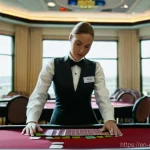
The glitz and glamor of a casino floor, the thrilling games, the high stakes—it’s easy to imagine being a casino dealer is a straightforward, even exhilarating job, all about mastering rules and procedures.
You learn the perfect shuffle, the precise payouts, and the game mechanics in theory, dreaming of that exciting atmosphere. But from my experience, stepping onto that bustling casino floor is where the real education truly begins, revealing a fascinating world far beyond the textbook.
The actual job demands a unique blend of sharp skills, unwavering focus, and a human touch that no training manual can fully capture. It’s about navigating unexpected situations and the psychology of the game in real-time, which is why the gap between what you learn in theory and what happens in practice can be astounding.
Let’s uncover the truth about what it’s *really* like behind the felt, where the rules meet reality!
The Unseen Psychology Behind the Game

Reading the Room, Not Just the Cards
When you first learn to deal, it’s all about the mechanics: shuffling, dealing, payouts. You’re told to keep a poker face, be impartial, and stick to the rules.
That’s the theory. But step onto a bustling casino floor, and you quickly realize that the game extends far beyond the cards or the roulette wheel. It’s a deeply human drama playing out in real-time.
I remember vividly during my first few weeks on the craps table, my supervisor pulled me aside and told me, “Kid, you’re looking at the dice, not the players.” It hit me then that my job wasn’t just to facilitate the game; it was to manage the *experience*.
Learning to read body language – the subtle tell of a frustrated player, the rising excitement of someone on a streak, or the quiet desperation of another – became an unspoken part of my training.
It’s about anticipating moods, defusing tension before it erupts, and even knowing when to offer a sympathetic nod or a lighthearted comment. This isn’t in any textbook, but it’s crucial for keeping the game flowing smoothly and the atmosphere positive.
You become a quiet observer, almost a psychologist, understanding that the felt table is as much a stage for human emotion as it is for chance. You learn to listen with your eyes and ears, picking up on cues that influence not just the game, but the overall vibe of the table.
It’s an intricate dance of observation and subtle interaction, ensuring everyone feels engaged and, hopefully, entertained, regardless of the outcome.
Beyond the Bets: Managing Expectations and Emotions
One of the biggest hurdles for any new dealer, myself included, is learning to handle the emotional rollercoaster that comes with gambling. In theory, players are rational adults, understanding the house edge and the unpredictable nature of luck.
In practice? Not always. I’ve seen people win fortunes and lose life savings in the span of an hour.
And who do they often look at when things go south? The dealer. Learning to maintain composure, offer a neutral but empathetic response, and keep the game moving when someone is clearly distraught or irate is an art form.
It’s about developing a thick skin while simultaneously projecting an aura of calm control. You might be dealing with a high roller who expects VIP treatment, a first-timer who needs extra guidance, or a seasoned regular who’s just having a bad day and wants to vent.
Every interaction is unique. I once had a player lose a significant amount and then proceed to tell me his entire life story, detailing every poor financial decision he’d ever made.
While it wasn’t my place to offer advice, simply listening with genuine, albeit professional, attentiveness seemed to diffuse some of his anger and allowed him to walk away calmly.
This ability to navigate intense emotional landscapes, without getting personally involved, is something no amount of classroom training can truly prepare you for.
The Grind Beneath the Glamour: Physical and Mental Demands
Standing Tall: The Physical Toll
From the outside, dealing looks relatively easy: you sit or stand at a table, push cards, and collect chips. Simple, right? Absolutely not.
The physical demands are surprisingly intense, and this is something that’s almost completely glossed over in dealer schools. We’re talking eight-hour shifts, often longer, spent almost entirely on your feet, rooted to one spot.
Imagine the constant strain on your back, your legs, your feet. I remember coming home after my first full week, feeling like my feet had run a marathon, and my lower back was screaming.
It’s not just the standing; it’s the repetitive motions – the shuffling, the pitching, the counting – all done with precision and speed. Carpal tunnel syndrome is a real threat, and you learn quickly to develop good posture and strong wrist muscles, often without even realizing you’re doing it.
The casino environment itself contributes; the air conditioning can be harsh, the noise levels are constant, and the lighting is specifically designed for the games, not always for dealer comfort.
You learn to adapt, to wear comfortable shoes, and to stretch whenever you get a break, but the physical toll is undeniable. It’s a marathon, not a sprint, and your body certainly feels it at the end of a long week.
The Mental Marathon: Focus Under Fire
Beyond the physical, the mental demands of being a dealer are something I believe are vastly underestimated. You’re constantly performing mental arithmetic, managing multiple players, watching for irregularities, and maintaining game integrity, all while engaging in polite conversation.
All of this happens in a fast-paced environment where a single mistake can cost the house a lot of money, or worse, cause a scene with an angry player.
The pressure to be accurate and efficient, especially during peak hours, is immense. I’ve had moments where the table was full, bets were flying, and I felt like I was juggling a dozen different tasks in my head, all while trying to keep a smile on my face.
One slip-up, one miscounted chip stack, and suddenly you’re under the microscope. That kind of sustained focus, hour after hour, is draining. It teaches you an incredible level of concentration, but it also means that by the time your shift ends, your brain feels just as tired as your feet.
You learn to compartment the chaos, to block out distractions, and to develop an almost robotic precision, but beneath that calm exterior, your mind is constantly whirring.
Navigating the Unwritten Rules of the Floor
The Dance with Superstition and Strategy
When you’re learning the rules of games like blackjack, craps, or roulette, everything is presented as a clear-cut system of probability and procedure.
However, once you’re on the floor, you quickly realize that players often operate on a completely different plane: superstition and personal strategy, often with little basis in logic.
I’ve encountered players who refuse to let me deal with a certain hand, who insist on blowing on the dice, or who have specific seating arrangements for “luck.” In theory, it’s irrelevant to the game.
In practice, ignoring these quirks can quickly alienate a player and disrupt the flow of the table. Part of being a good dealer is subtly acknowledging these superstitions without encouraging them, and certainly without letting them interfere with the game’s integrity.
It’s a delicate balance of respect and professionalism. You learn to adapt to these individualistic behaviors, understanding that for many, the casino experience is as much about the ritual as it is about the potential winnings.
It’s like being a performer in a play where the script keeps changing, and you have to improvise while still keeping the main plot moving forward.
The Art of the Pit Boss Relationship
Dealer training usually covers hierarchy and reporting structures, but it rarely delves into the nuanced, unspoken relationship between dealers and their pit bosses.
In a perfect world, it’s straightforward: they supervise, you deal. In reality, your pit boss is your immediate lifeline, your advocate, and sometimes, your toughest critic.
Building a good rapport, understanding their particular management style, and anticipating their needs becomes a silent part of your job. I learned quickly that a good pit boss can make your shift smooth and enjoyable, while a difficult one can make it feel like an eternity.
It’s about more than just doing your job; it’s about being a team player, showing initiative, and demonstrating reliability. They notice everything: your efficiency, your customer service, your attitude.
Your ability to anticipate when a player needs a drink, or when a situation might escalate, and proactively signaling your pit boss can earn you immense respect.
This subtle interplay, this unspoken communication, is a huge part of the day-to-day reality that no manual can teach you. It’s about fitting into a complex ecosystem where every role supports the other.
Beyond the Cards: Customer Service and Conflict Resolution
The Unexpected Role of a Confidante
When you sign up to be a casino dealer, you expect to deal cards, not life advice. Yet, an interesting part of the job that theoretical training doesn’t prepare you for is how often you become an accidental confidante or even a pseudo-therapist.
Players, especially regulars, often open up. They’ll share stories of their wins, their losses, their family troubles, their dreams, and their disappointments.
It’s a strange dynamic where you, the impartial game facilitator, are privy to intensely personal moments. I’ve had players tell me about their upcoming weddings, their struggles with illness, or even their excitement about a new grandchild.
You learn to listen empathetically, offer neutral pleasantries, and gently steer the conversation back to the game if it veers too far off course. It’s a testament to the human connection that can form even in a transactional environment.
This isn’t about forming friendships, but about acknowledging the shared human experience that plays out around the table. It’s a subtle art of being present without being intrusive, and offering a comforting, yet professional, ear.
This unexpected aspect truly adds another layer of complexity and humanity to the role.
De-escalation: The Unwritten Rulebook
Conflict is inevitable in any customer-facing role, but in a casino, with money and emotions running high, it can escalate quickly. Theoretical training might touch on basic customer service, but it rarely dives deep into the art of de-escalation when a player is genuinely upset or even angry.
I’ve seen everything from frustrated shouts to outright accusations of cheating. The real-world skill isn’t just about calling a pit boss; it’s about trying to defuse the situation yourself, using calm language, validating their feelings without agreeing with their accusations, and maintaining a professional demeanor under duress.
My own experience taught me that often, just letting someone vent for a moment, without interrupting or getting defensive, can do wonders. Then, calmly reiterating the rules or explaining a procedure can often bring them back down to earth.
One time, a player was convinced I had short-changed him on a payout, despite multiple counts. Instead of arguing, I calmly recounted the chips, then had the pit boss recount them in front of him.
The transparency, rather than confrontation, resolved the issue quickly. This ability to handle high-stress confrontations with grace and professionalism is an on-the-job masterclass in conflict resolution.
The Financial Reality: Tips, Taxes, and the True Take Home
The Rollercoaster of Tip Earnings
When you first start as a dealer, everyone talks about the tips. And yes, good tips can make a significant difference. In theory, you’ll be making great money if you’re good.
In practice, the reality of tip earnings is far more volatile and less glamorous than many imagine. It’s a daily, sometimes hourly, rollercoaster. Some days, you hit a lucky streak, and the players are generous.
Other days, the house is cleaning up, players are losing, and tips are scarce. Plus, almost all casinos pool tips, which means your individual effort doesn’t always directly translate to your payout.
You contribute your tips to a shared pot, which is then divided among all dealers based on hours worked. This evens out the good and bad days, but it also means that even if you have an amazing personal run, you’re sharing that success.
You quickly learn that while tips are a major part of your income, they are unpredictable, and managing your finances requires a careful hand, budgeting for the lean days as much as for the flush ones.
It’s a far cry from the consistent hourly wage of most jobs, adding a layer of financial uncertainty.
Beyond the Glitter: Taxes and Expenses

Another often overlooked aspect of a dealer’s income, especially for those new to the profession, is the tax implications of tips. In theory, tips are just extra money.
In practice, they are fully taxable income, and the casino reports them to the IRS. This means a significant portion of what you earn in tips goes straight to taxes, often surprising new dealers who might not have accounted for it.
It’s not just income tax, either; there are Social Security and Medicare taxes too. Beyond taxes, there are other job-related expenses that chip away at your take-home pay.
Uniform dry cleaning, comfortable shoes (a non-negotiable expense for your feet’s sake!), and even the occasional small gifts for pit bosses or colleagues (a subtle way to build goodwill) can add up.
It’s a reality check that the gross amount you see coming in is far from the net amount you actually take home. Budgeting and financial planning become incredibly important, especially when dealing with a fluctuating income stream.
The financial picture is more complex and less straightforward than the initial allure of “good tips” suggests.
| Aspect | Theoretical Training Focus | Real-World Casino Floor Reality |
|---|---|---|
| Game Rules & Mechanics | Memorizing rules, procedures, payouts, specific sequences for each game. | Applying rules flawlessly under pressure, adapting to player quirks, handling simultaneous actions and questions, maintaining composure amidst chaos. |
| Customer Interaction | Basic etiquette, professional demeanor, “the customer is always right” principles. | De-escalating conflicts, managing emotional players, becoming an accidental confidante, reading subtle body language, adapting to diverse personalities and superstitions. |
| Work Environment | Clean, quiet classroom setting, focus on individual tasks. | Loud, fast-paced, high-stress, physically demanding (long standing hours), constant vigilance required, dealing with secondhand smoke/alcohol. |
| Income | Discussion of potential tip earnings, often highlighting high averages. | Volatile tip earnings (pooled, fluctuating), significant tax implications, unforeseen job-related expenses, need for careful financial planning. |
| Personal Schedule | Flexible hours or set shifts as per course examples. | Irregular shifts (nights, weekends, holidays), major disruption to social life and sleep patterns, need for strict self-management. |
The Dealer’s Life: Shift Work and Social Sacrifice
The Anti-Social Hours
When you picture a job, you usually think of a 9-to-5, Monday-to-Friday schedule. Being a casino dealer flips that notion completely on its head. In theory, you’re working in an exciting environment.
In practice, that excitement often comes at the cost of a “normal” social life. Casinos are open 24/7, which means dealers work shifts that can be incredibly challenging: late nights, early mornings, weekends, and holidays are the norm, not the exception.
I’ve missed countless family gatherings, friends’ birthdays, and holiday celebrations because I was on the clock. It takes a toll on your relationships and your ability to participate in typical social activities.
You learn to adapt, to make friends with other service industry workers who share similar schedules, and to cherish the odd weekday off you might get.
This isn’t a job for someone who needs a consistent routine or who wants every weekend free. The allure of the casino lights fades somewhat when you realize you’re often the only one working while everyone else is enjoying their downtime.
It’s a significant lifestyle adjustment that many don’t fully appreciate until they’re deep into it.
Finding Your Rhythm in Reverse
Adapting to the “reverse” schedule of a casino dealer is a lifestyle in itself. It’s not just about missing social events; it’s about recalibrating your entire biological clock.
Sleeping during the day, staying awake and alert through the night – it requires discipline and a strong constitution. In theory, you just sleep when you’re tired.
In practice, sunlight and the general bustle of the world outside your darkened bedroom can make deep, restorative sleep a challenge. Your diet, exercise routine, and even your mental well-being can be affected by the constant shift changes and disruption to natural sleep patterns.
I learned the hard way the importance of blackout curtains, a strict sleep schedule, and making time for self-care, even when my body felt out of sync.
It’s about creating a new normal that allows you to function optimally in a schedule designed to cater to entertainment, not personal convenience. You find your rhythm, eventually, but it’s a hard-won peace that comes from months, or even years, of trial and error in managing your body’s natural clock.
Mastering the Tables: Beyond Technical Proficiency
The Art of the Controlled Chaos
When you’re first learning to deal, the focus is entirely on technical proficiency: the perfect shuffle, the precise chip counts, the flawless payout.
It’s all about control and following procedure to the letter. But the reality of a busy casino floor is often controlled chaos, and simply being technically proficient isn’t enough to truly master the tables.
I quickly learned that the true skill lies in managing that chaos with a calm exterior. Imagine a blackjack table with seven players, all betting different amounts, some hitting, some standing, some splitting, some doubling down, all while the pit boss is watching and the floor is buzzing.
It requires not just knowing the rules, but being able to process multiple inputs simultaneously, make quick decisions, and execute actions with speed and accuracy, all without breaking your stride or losing your composure.
It’s about developing an almost intuitive sense of the game’s flow, anticipating the next move, and being able to handle unexpected player actions or questions without missing a beat.
This capacity to absorb and manage high-pressure, multi-faceted situations is a skill forged only through countless hours of live play.
Developing the Dealer’s Intuition
Theoretical training gives you the blueprint, but it’s the practical experience that develops your “dealer’s intuition.” This isn’t about gut feelings on where the ball will land, but rather an innate sense of the table, the players, and the rhythm of the game.
It’s knowing when a player is about to ask a question before they even open their mouth, or when a situation is potentially escalating and requires a subtle alert to the pit boss.
It’s the ability to spot a miscount or an anomaly in the chip stacks out of the corner of your eye, even when your primary focus is on dealing the cards.
I remember one time, I just had a “feeling” about a player’s bet on roulette, and upon a second, quick glance, I realized they had inadvertently placed chips outside the betting area.
A quick, polite correction saved them potential frustration later. This intuition is honed through experience, through seeing countless scenarios unfold, and learning to anticipate the common patterns and deviations.
It’s the subtle, almost subconscious layer of expertise that separates a good dealer from a truly great one, allowing you to react instinctively and effectively to the unpredictable dynamics of a live game.
The Unexpected Perks and Personal Growth
A Front-Row Seat to Humanity
While the challenges are undeniable, there are also unexpected perks to being a casino dealer, and one of the most profound for me was getting a front-row seat to the incredible diversity of humanity.
Every person who sits at your table has a story, a background, and a unique reason for being there. You meet people from all walks of life – tourists from across the globe, seasoned gamblers, celebrities, business moguls, and everyday folks hoping for a bit of luck.
It’s a fascinating cross-section of society that you simply wouldn’t encounter in many other professions. This exposure broadens your perspective, teaches you about different cultures and personalities, and significantly improves your people skills.
I’ve learned more about human nature by dealing cards than I ever did in a sociology class. You learn to appreciate the subtle nuances of communication, the power of a friendly smile, and the universality of hope and disappointment.
It’s a constant, live education in human interaction, making you a more observant and empathetic individual, albeit one who still has to maintain professional distance.
Unlocking Your Inner Calm and Confidence
Perhaps the most significant personal growth I experienced as a dealer was the development of an almost unwavering inner calm and confidence, especially under pressure.
When you’re constantly dealing with high stakes, demanding customers, and the need for precision, you quickly learn to manage stress and perform effectively in challenging situations.
This isn’t just about poker faces; it’s about genuine composure. I remember my first major high-limit game; my hands were shaking initially. But with time, and through countless hours of maintaining that calm exterior, it started to become genuinely internalized.
The ability to stay focused and unflappable when the stakes are high, to resolve conflicts with grace, and to confidently manage a demanding table are skills that translate powerfully into every other aspect of life.
You learn to trust your instincts, to think quickly on your feet, and to project an aura of quiet authority. This self-possession, forged in the intense environment of a casino, is an invaluable takeaway, giving you a strength and resilience you might not have known you possessed.
It’s a confidence that comes from consistently delivering under pressure.
Wrapping Up
Well, friends, as we’ve peeled back the layers of a casino dealer’s life, I hope you’ve seen that it’s so much more than just shuffling cards and pushing chips. It’s a fascinating, demanding, and incredibly human profession. I’ve shared my insights, the good and the tough, hoping to give you a real glimpse into what it’s like. It’s a job that truly teaches you about people, resilience, and finding your stride in an environment that never truly sleeps. It might not be for everyone, but for those of us who’ve lived it, it leaves an indelible mark.
Useful Information to Know
-
Invest in Your Feet and Back: Seriously, this isn’t just a suggestion, it’s a lifeline. You’ll be spending long hours on your feet, often on unforgiving casino floors. Quality, supportive shoes are a non-negotiable expense. Think about cushioned inserts, good arch support, and even compression socks. Stretching regularly and maintaining good posture are also key. Your body will thank you after those marathon shifts. Taking care of yourself physically will make a world of difference in your long-term comfort and ability to sustain this demanding career.
-
Master Your Money Mindset: While tips can be generous, they are rarely consistent. Many casinos operate on a pooled tipping system, meaning your individual stellar performance doesn’t always translate directly to a massive personal bonus on that specific night. Base pay can be close to minimum wage, so tips form the bulk of a dealer’s income, which can range widely. Learning to budget for the lean weeks is crucial. Treat your income as fluctuating, prioritize savings, and always factor in the tax implications of those tips. It’s not just “extra cash”; the IRS sees it all.
-
Hone Your “Human Skills”: Technical dealing proficiency is just the entry ticket. The real game-changer is your ability to read people, manage emotions (both yours and the players’), and de-escalate tension. You’ll encounter every personality type imaginable, from exuberant winners to frustrated losers, and sometimes even those who are just looking for someone to listen. Patience, empathy, and a thick skin are your best friends. Learning to offer a neutral yet supportive presence can turn a potentially bad situation into a manageable one, ensuring everyone, including yourself, has a smoother experience.
-
Embrace the Unconventional Schedule: Forget your typical 9-to-5. Casino life means nights, weekends, and holidays are often your busiest workdays. This can significantly impact your social life and personal routines. Be prepared for a lifestyle adjustment; it’s a marathon, not a sprint. Consider how you’ll maintain relationships, personal hobbies, and your overall well-being with a schedule that often runs counter to the rest of the world. Building a support network with other service industry professionals who share similar hours can be incredibly helpful for maintaining a sense of community.
-
Never Stop Learning and Adapting: The casino floor is dynamic, with new games, evolving house rules, and a constant stream of diverse players. Your initial dealer school training is just the beginning. The most successful dealers are those who continuously refine their skills, adapt to different game paces, and stay sharp with their mental math and customer service. Always be open to learning from your pit bosses and more experienced colleagues. This isn’t a static job; it’s one where continuous personal and professional development truly pays off, keeping you engaged and valuable to the team.
Key Takeaways
Becoming a casino dealer is an immersive journey into the heart of human psychology and high-stakes interaction, far beyond the initial allure of cards and chips. It’s a role that demands exceptional resilience, sharp mental acuity, and profound people skills, all while navigating a physically and emotionally challenging environment. The unexpected depth of human connection and the personal growth forged under pressure are truly invaluable, transforming the daily grind into a rich, if sometimes wild, life experience. It’s not just a job; it’s a masterclass in life, played out one hand at a time.
Frequently Asked Questions (FAQ) 📖
Q: So, is the casino floor really as glamorous as it looks in the movies, or is that just Hollywood magic?
A: Oh, if only it were all glitz and high-fives like in the movies! I remember thinking I’d be living this suave, sophisticated life when I started. The reality?
It’s a lot more grit than glam. Sure, there are moments of excitement, especially when a player hits a big win and the energy is palpable, but those are fleeting.
Most of the time, you’re on your feet for hours, navigating smoky rooms, dealing with the same card sequences, and trying to keep a smile on your face even when you’re completely exhausted.
It’s a job, through and through, with long, often overnight, shifts. The “glamour” is mostly for the players who pop in for a few hours of fun. For us behind the felt, it’s about focus, stamina, and making sure everyone has a fair game.
Don’t get me wrong, it has its unique perks, but living the high life? Not so much, unless you count the free coffee.
Q: Beyond shuffling cards and making payouts, what’s the trickiest skill a dealer really needs to master that isn’t taught in training?
A: This is a fantastic question because it gets right to the heart of it! While training teaches you the rules inside and out, the biggest, unwritten skill you truly need is a deep understanding of human psychology, and how to stay cool under pressure.
I learned quickly that it’s not just about the cards; it’s about reading people, understanding their moods, and sometimes, de-escalating situations without anyone even realizing it.
You have to develop this almost sixth sense for when a player is getting frustrated, or when they’re about to make a wild bet. It’s about being personable but firm, maintaining control of your table, and keeping everyone entertained while still upholding the integrity of the game.
Mastering that subtle dance between entertainer, referee, and psychologist? That takes actual experience, and no textbook can really prepare you for the sheer variety of personalities you’ll encounter on any given night.
Q: What was the biggest shock or surprise you encountered when you transitioned from theoretical training to actually dealing on a bustling casino floor?
A: Oh, the biggest shock, without a doubt, was the sheer, unrelenting pace and the mental agility required in real-time. In training, everything is controlled; you practice at your own speed, and there’s always an instructor to help.
But when you step onto that live floor, it’s like jumping into a fast-moving river. The games come at you rapid-fire, especially during peak hours. You’re constantly calculating payouts, monitoring bets, watching for tells, handling chips, and trying to engage with players – all simultaneously and without missing a beat.
There’s no pause button! I remember my first week, my brain felt like it was doing gymnastics 24/7. That gap between practicing a perfect shuffle in a quiet classroom and executing it flawlessly while a high-roller is giving you the stink eye, asking for a complicated bet, and a cocktail waitress is trying to get through – that’s where the rubber meets the road, and it was an eye-opener!